
BARN TALK
The Unfiltered Voice of Rural America
Weekly Newsletter · Issue #003 · April 15, 2026
|
|
Hey folks, Planting season is breathing down everybody's neck and the markets are doing what markets do: making sure nothing is simple. Crude oil just fell off a cliff on ceasefire news, tariffs are still squeezing both sides of the export equation, and the USDA wants to cut the people who answer your phone calls by a quarter. We've got all of it this week, plus some thoughts on the one thing that doesn't show up in any balance sheet but matters more than most of us realize.
This Week
|
Tariffs are squeezing farmers from both ends and fertilizer costs aren't letting up
|
|
The USDA wants to cut 2,000 Farm Service Agency jobs over two years
|
|
Crude oil drops nearly $18 a barrel on ceasefire news while Bitcoin jumps 8%
|
|
Sawyer on the stories your family hasn't told yet and why that matters
|
|
Markets, trivia, word of the week, and a Did You Know that might change how you talk to your kids
|
|
|
Live Event Countdown
We're at 1,223 of 10,000 subscribers. Help us get there.
Hit 10,000 and we throw a live event at the barn. Subscribers get first access to tickets.
|
|
|
TARIFFS ARE SQUEEZING FARMERS FROM BOTH ENDS AND THE MATH DOESN'T ADD UP
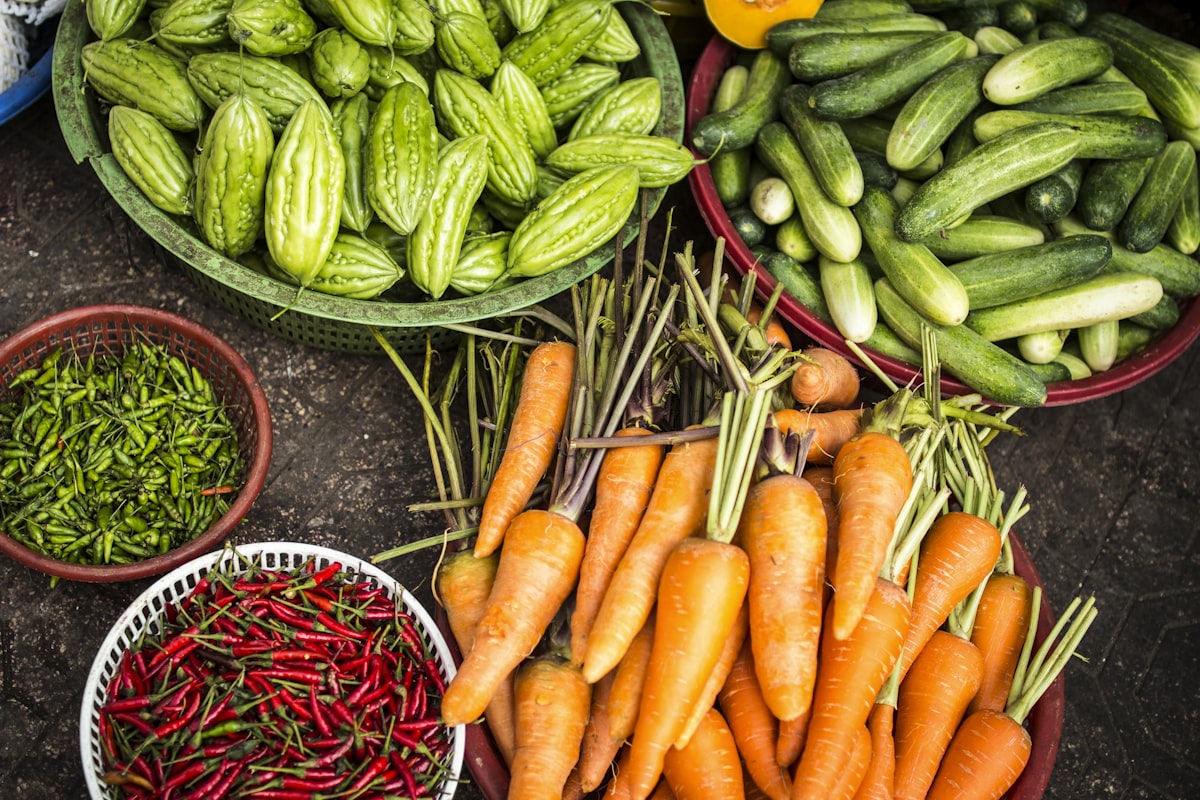
American farmers are getting hit from two directions at once. On the export side, tariffs are blocking access to major buyers, most notably China, which historically absorbs a significant share of U.S. corn and soybean production. On the input side, fertilizer prices are running 10 to 15 percent above last year due to the same trade barriers that are supposed to be helping. You're selling into a smaller market and paying more to do it. That is a squeeze, and there is no soft way to describe it.
What the numbers actually say
The Purdue/CME Group Ag Economy Barometer showed improved farmer sentiment this week, driven partly by better commodity prices and anticipated government payment expectations. Agriculture Secretary Brooke Rollins called signs of Chinese purchasing activity "very encouraging" through 2028. That's fine as far as it goes, but encouraging signs don't pay for anhydrous. The fertilizer increase is already showing up in operating budgets, and if Chinese buyers stay unpredictable through summer, the soybean basis is going to reflect it.
The Southeast Asia pivot
Industry groups are actively pushing into Southeast Asian soybean markets as a partial hedge against China volatility. Demand in the region is real and growing. Whether it can absorb enough volume to matter is a longer-term question. For this planting season, the reality is that you're pricing inputs before you know what the export picture looks like in October. Pricing inputs blind is an uncomfortable way to run a business.
|
From the Barn
Every time somebody tells me tariffs are good for agriculture, I ask them to walk me through the fertilizer number. The export access you might get back in three years doesn't help you write the input check this spring. Pointing that out is arithmetic, not politics.
|
|
|
|
THE USDA WANTS TO CUT 2,000 FARM SERVICE AGENCY JOBS AND CALL IT EFFICIENCY
The White House's proposed FY2027 USDA budget calls for a 19 percent cut in discretionary spending across the department. Inside that number is something that is going to matter a lot more to working farmers than any headline figure: a proposal to cut Farm Service Agency staffing from 8,135 employees in FY2025 down to 6,009 by FY2027. That is 2,126 people gone in two years from the agency that processes disaster payments, farm loan applications, conservation program enrollment, and everything else that connects federal farm policy to the people it's supposed to serve.
Conservation Technical Assistance is proposed at zero funding. Zero means gone. The program provides technical support to farmers working through USDA conservation programs, and this proposal eliminates it entirely. If you were planning to use that resource this year, the budget says you're on your own.
What the cuts look like on paper
|
FSA staffing FY2025: 8,135 employees
|
|
FSA staffing proposed FY2027: 6,009 employees (-26%)
|
|
Conservation Technical Assistance: Zeroed out entirely
|
Why this is different from routine budget noise
FSA county offices are often the only federal presence in rural counties. They are where a farmer walks in after a hailstorm and starts the paperwork to keep the operation alive. Cutting a quarter of that workforce does not make the agency more efficient. It makes the waitlist longer, the phone calls harder to return, and the rural county office that was already understaffed even more stretched. This is one to watch closely because budget proposals have a way of becoming budget reality.
|
From the Barn
There's a version of cutting government waste that makes sense, and then there's cutting the people who answer the phone when a tornado takes out your operation. Those are not the same thing. If this proposal goes through as written, rural communities are going to feel it in ways that won't show up in any efficiency report.
|
|
|
Partner With Us
Want to reach rural America?
Barn Talk goes out to farmers, ranchers, and working-class folks who actually buy things. If that sounds like your customer, let's talk.
[email protected] →
|
|
|
|

|
Tork's Market Update
What the numbers mean for the people actually in the field
|
This Week's Numbers
Prices as of market close · April 8, 2026 · Courtesy of katsgrain.com
|
Corn (May '26)
$4.49 /bu
▼ $0.05 on the week
|
|
Soybeans (May '26)
$11.58 /bu
▲ $0.12 on the week
|
|
|
Chicago Wheat (May '26)
$5.98 /bu
▼ $0.28 on the week
|
|
Live Cattle (Apr '26)
$248.20 /cwt
▲ $1.40 on the week
|
|
|
Lean Hogs (Apr '26)
$90.78 /cwt
▼ $0.85 on the week
|
|
Crude Oil (May '26)
$95.17 /bbl
▼ $17.78 on the week
|
Tork's Picks
|
Bitcoin
$71,497 USD
▲ +$5,251 on the week
|
|
Tesla (TSLA)
$347.10 /share
▼ $14.73 on the week
|
This ain't financial advice. I'm just a farmer with an opinion.
|
Tork's Take
The story this week is crude oil. Down nearly eighteen bucks a barrel on the U.S.-Iran ceasefire announcement, which explains why Bitcoin went the other direction and popped eight percent. When geopolitical risk comes off, money moves fast. Wheat getting hammered is worth watching heading into spring. Corn and beans are doing what they do this time of year. Cattle held together, which is good news if you're in that business. Tesla is having a rough stretch and J.P. Morgan is out there calling for sixty percent more downside, which tells you everything you need to know about how Wall Street feels about that company right now. Bitcoin keeps finding support above $70,000. I said it was going there a long time ago.
|
|
|
|

|
Sawyer's Spotlight
The younger generation's take, straight from the barn
|
We had Vance Crowe in the barn recently and one of the things he does for a living is record families telling their life stories. Not a documentary, not a memoir project, not a history class assignment. Just a professional interview where your parents or grandparents sit down and talk through their actual life on camera, so their kids and grandkids have the real version of it down the road.
He told a story about a dad who came to pick up a recorded interview he'd done with his son. The kid was six. Months later the dad called back and said: if my house were on fire and I could only grab one thing, it would be that recording. He said he couldn't get it back any other way. The six year old had answered questions honestly, in his own voice, in a way he never would have if his dad had just sat him down and asked the same things directly.
|
"Your last name means more when you know those stories. My grandpa did this. My dad did this. I'm not going to be the one to waste what that name means."
|
Vance mentioned research out of Emory University that found kids who know their family stories are significantly less likely to struggle with depression, anxiety, and addiction than those who don't. That connection held even for adopted kids as long as the family they were adopted into told a clear story about who they were and what they stood for. The finding is functional, not sentimental. It is about what happens inside a person when they have a framework for who they are and where they came from.
Here's the deal: most of us have parents and grandparents who think their stories aren't interesting enough to record. They assume everyone already knows the important parts. They don't want to seem like they're making it about themselves. But the stories that exist in someone's head right now will not exist anywhere else once they're gone. That is just the reality of how this works. The journal you gave your mom that she never filled out didn't fail because she had nothing to say. It's hard to stare at blank pages and know where to start.
You don't need a professional. You need to show up, ask one good question, and shut up. Start with: what was your hardest year? Hit reply if that conversation happens this week.
|
|
|
4 Things That Caught Our Eye This Week
|
01
|
Congress is looking at a $20 billion farmer aid package
Congressman Brad Finstad announced that proposed farmer aid legislation currently moving through Washington could reach $20 billion in relief for ag operations. If it passes as proposed, it would be one of the larger single-year ag relief packages in recent memory. Whether it gets through the budget environment we described above is a different question entirely. (Source: Brownfield Ag News, April 6, 2026)
|
|
|
02
|
Farmer sentiment ticked up this month despite the squeeze
The Purdue/CME Group Ag Economy Barometer showed improved farmer sentiment for April, driven by slightly better commodity prices and expectations around government payments. Economists noted that costs remain elevated and the improvement is cautious. The word "cautious" is doing a lot of work in that sentence. (Source: Brownfield Ag News, April 7, 2026)
|
|
|
03
|
U.S. soybean industry is building a Southeast Asia play
With Chinese soybean buying remaining unpredictable, U.S. export groups are actively developing long-term supply relationships in Southeast Asia. Demand in the region is growing and the volume opportunity is real. It is not a short-term fix for anyone with beans in the bin this spring, but it is the kind of market diversification that matters for the next five years. (Source: Brownfield Ag News, April 8, 2026)
|
|
|
04
|
Iowa corn: 80% of it never leaves the state
A reminder worth having: 80 percent of Iowa's corn crop is used in-state to produce ethanol, feed livestock, and manufacture food and industrial products. In 2023, beef and pork exports accounted for the equivalent of 84 million bushels of Iowa corn usage, generating a return of nearly $175 per Iowa corn acre. The Iowa Corn Promotion Board and the U.S. Meat Export Federation work in 80+ countries to keep that number moving. The checkoff does more than people give it credit for. (Source: Iowa Corn Promotion Board)
|
|
|
Before You Go
|
Barn Talk Trivia
Think You Know Your Stuff?
This Week's Question
According to the USDA's 2022 Census of Agriculture, what is the average age of the principal farm operator in the United States?
| A 44 years old |
|
B 57.5 years old ✓ |
|
| C 51 years old |
|
D 63 years old |
|
Answer
B — 57.5 years old. That is the highest average age ever recorded in the Census of Agriculture, up from 50.5 in 1997. Fewer than 9 percent of U.S. farm operators are under the age of 35. The question of who works this land in twenty years is not a hypothetical.
|
|
|
Did You Know?
In 1960, the average American farmer fed roughly 25 people. Today that number is closer to 166. That shift happened through equipment, seed genetics, precision agronomy, and decades of compounding knowledge passed between generations. It is one of the more remarkable numbers in American agriculture and almost nobody outside the industry knows it.
|
|
Barn Talk Word of the Week
|
PROVENANCE
|
(n.) The origin and documented history of something. In farming it means knowing not just what the land is worth today, but the full story of every person who ever worked it. A piece of equipment can have provenance. A farm name can have provenance. So can a family. Most people don't know theirs as well as they think they do.
|
|
|
|
Planting season is here and the news is moving fast. Stay on top of what matters, forward this to someone who needs it, and if the Sawyer's Spotlight hit close to home this week, go make that phone call. You know who to call.
We'll see you in the barn.
Sawyer & Tork
joinbarntalk.com
|
Know Someone Who Needs This?
Forward this to a farmer, a rancher, a tradesman, or anyone who's tired of being ignored by the mainstream media. Help us get to 10,000 subscribers and earn your spot at the live event.
Share Barn Talk
YouTube |
Instagram |
Sawyer's X |
Tork's X |
Spotify
© 2026 Barn Talk · joinbarntalk.com
|
|
