
BARN TALK
The Unfiltered Voice of Rural America
Weekly Newsletter · Issue #002 · April 8, 2026
|
|
Hey folks, Corn is just starting to go in the ground. Meanwhile crude oil blew past $111 a barrel, a University of Illinois economist just explained why your government farm check ends up in your landlord's pocket, and the Iowa Ag Secretary is out here calling the current situation "death by a thousand cuts." Good timing on the planting. Rough timing on everything else.
This Week
|
Farm aid is flowing through to landlords and input suppliers, not farmers
|
|
Crude oil tops $111/barrel and what it means for diesel and fall input costs
|
|
Iowa Ag Secretary calls it "death by a thousand cuts" for farmers right now
|
|
Cattle ranchers liquidating herds as a multi-year drought keeps grinding
|
|
Beyond Meat drops another 24% in March after back-to-back revenue misses and a delayed annual filing.
|
|
|
Live Event Countdown
We're at 1,098 of 10,000 subscribers. Help us get there.
Hit 10,000 and we throw a live event at the barn. Subscribers get first access to tickets.
|
|
|
THE FARM AID IS FLOWING. IT'S JUST NOT GOING TO FARMERS.
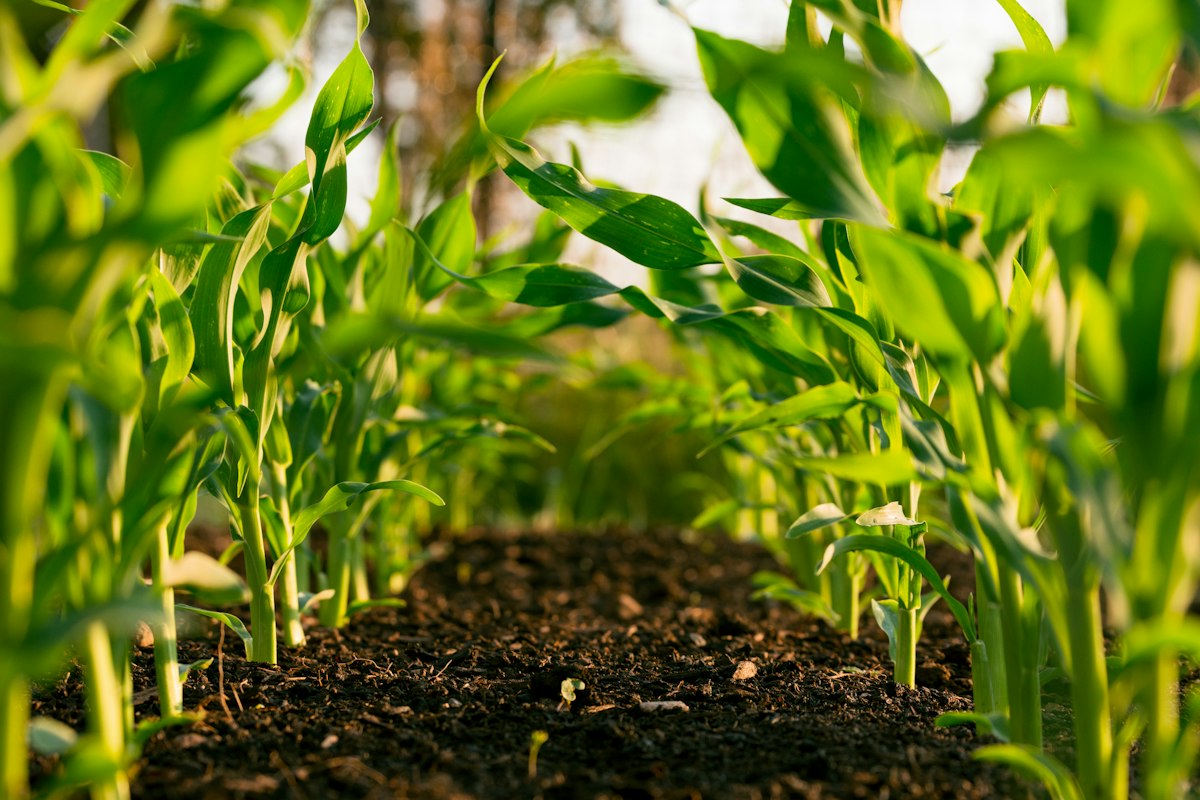
University of Illinois farm management specialist Gary Schnitkey delivered a blunt assessment this week at the Illinois Society of Professional Farm Managers conference: the 2025 ECAP payments and 2026 Farmer Bridge Assistance payments are stabilizing the sector on paper, but the money isn't building producer equity. It's flowing straight to landlords and input suppliers. Farmers are acting as pass-through agents for federal aid they never actually get to keep. Meanwhile Iowa Agriculture Secretary Mike Naig was traveling the state this week describing what farmers are dealing with as "death by a thousand cuts."
HOW THE PASS-THROUGH WORKS
When the government sends farm aid, it raises the floor on what operations can afford to pay for land and inputs. Cash rents go up. Fertilizer suppliers price to what the market can bear. The farmer gets the check, pays it forward to the landlord at the next lease renewal, and ends up in roughly the same position as before. Schnitkey says this dynamic has been playing out across the Corn Belt for years, and the 2026 assistance payments are continuing the cycle. Durable farm recovery requires stronger market-driven commodity prices, not more relief packages that evaporate before they reach the bottom line.
WHAT NAIG IS HEARING ON THE GROUND
With corn at $4.52 and soybeans under $12, the margin on a cash-rented operation is thin before you factor in nitrogen up 69% year-over-year and diesel tracking a $111 crude oil market. Naig reports that fuel and fertilizer price shocks, Middle East-driven supply chain disruptions, and soft commodity prices are stacking on each other simultaneously. Producers who locked in input costs last year are in a different position than everyone else. The ones buying inputs right now are getting hit from every direction at once with no single pressure point big enough to qualify as a crisis, but all of them together adding up to one.
|
From the Barn
You get a government check, you pay it to your landlord at the next lease renewal, you buy your inputs at the price the market knows you can now afford, and you end up right back where you started. The aid didn't help the farmer. It helped everybody around the farmer.
|
|
|
|
OIL ABOVE $100 CHANGES THE MATH ON EVERY FARM BUDGET IN AMERICA
WTI crude oil crossed $100 a barrel for the first time since 2022 last week and then kept going. By the close on April 2, May crude settled at $111.54 a barrel. That's an $11.90 move in a single week, driven by escalating military tensions in the Middle East and a market that has decided the geopolitical risk premium is not going away on its own.
For farmers, crude oil isn't an abstract financial story. It's diesel. It's the per-mile cost on every grain truck moving your crop. It's anhydrous ammonia, which is already running 69% above last year on nitrogen costs. If crude stays above $100 through the growing season, the cost-of-production math on a fall corn crop is going to look very different than it did when you were doing your February cash flows.
THE NUMBERS ON THE WEEK
|
WTI Crude Oil (May '26) closed at $111.54/bbl on April 2, up $11.90 on the week. The $100 barrier broke March 28 for the first time since 2022.
|
|
Nitrogen fertilizer (urea) is up 32% month-over-month and 69% year-over-year heading into planting season. Small operations buying inputs right now are getting hit hardest.
|
|
Diesel at the pump historically tracks crude with a 2 to 3 week lag. A $10+ crude move translates to roughly $0.25/gallon at the pump in the following month. That math is already in motion.
|
WHAT THIS MEANS BEFORE FALL
The conversations about fall input costs are going to get uncomfortable fast. Diesel is one thing. But when nitrogen is running 69% above last year and crude is pushing toward $115, the per-acre math on a corn crop you haven't even planted yet starts getting tight. The producers who locked in their input costs early this winter are in a very different position than the ones buying right now.
|
From the Barn
When crude was at $80 everybody called it elevated. Now it's at $111 and climbing and the same people are calling it a geopolitical situation that'll resolve itself. Maybe it will. But your fall diesel contract doesn't care why it happened.
|
|
|
Partner With Us
Want to reach rural America?
Barn Talk goes out to farmers, ranchers, and working-class folks who actually buy things. If that sounds like your customer, let's talk.
[email protected] →
|
|
|
|

|
Tork's Market Update
What the numbers mean for the people actually in the field
|
This Week's Numbers
Prices as of market close · April 2, 2026 · Courtesy of katsgrain.com
|
Corn (May '26)
$4.52 /bu
▼ $0.04 on the week
|
|
Soybeans (May '26)
$11.64 /bu
▲ $0.04 on the week
|
|
|
Chicago Wheat (May '26)
$5.98 /bu
▼ $0.09 on the week
|
|
Live Cattle (June '26)
$246.32 /cwt
▲ on the week
|
|
|
Lean Hogs (June '26)
$104.47 /cwt
▲ on the week
|
|
Crude Oil (May '26)
$111.54 /bbl
▲ $11.90 on the week
|
Tork's Picks
|
Bitcoin
$66,503 USD
▲ $138 on the week
|
|
Beyond Meat (BYND)
$0.63 /share
▼ ~23% on the week
|
This ain't financial advice. I'm just a farmer with an opinion.
|
Tork's Take
Corn's sitting at $4.52 and beans are holding around $11.64, which on paper looks stable. What's not stable is crude at $111. When oil moves that fast and that hard, you don't ignore it. Diesel is going to follow with a lag. Anhydrous is already running hot. Bitcoin sitting flat around $66,500 tells me the money isn't panicking yet, but it's paying attention. Beyond Meat at $0.63 a share is every cattle producer's favorite bedtime story right now. The plant-based meat revolution apparently needed actual meat to survive.
|
|
|
|

|
Sawyer's Spotlight
The younger generation's take, straight from the barn
|
The math on being a young American right now is worth sitting with for a minute. The average home costs $495,000. A mortgage on that house, even with a decent down payment, runs between $2,300 and $4,500 a month. The average American salary is $64,000. Take-home on $64,000, after taxes, gets you to about $4,200 a month. I'm not going to spell out why those numbers don't work. You can do the subtraction yourself. The point is that everybody in a position to change the system can also do that subtraction, and most of them have decided not to.
I've been listening to Scott Galloway lately. He's a professor and entrepreneur who talks a lot about economics and generational wealth. He made the case that the period from roughly 2000 to 2020 is going to go down as one of the greatest economic eras in American history. Cheap money. Real job growth. Consistent asset appreciation across the board. For anybody who was already in the market and already owned a home during that run, it was extraordinary. The generation that was too young to participate in most of it is now trying to buy in at the top.
|
"Young people didn't get the cheap money era. They got the bill for it."
|
When COVID hit, the government printed money and handed it out. The goal was to prevent a depression and I understand the logic. What the logic didn't account for is what that costs the generation that was supposed to step into the gap. When economies stall, there's a reset that's supposed to happen. Real estate corrects. Businesses that were limping along close. Young people with nothing to lose can actually start something. We didn't let that happen. We propped everything up, inflated every asset class, and sent the younger generation a 19% inflation rate and an 8% mortgage as a parting gift.
The middle class isn't just a political concept. It's the engine of this economy. A country where most people earn decent money and spend it locally generates more activity than any model where wealth concentrates at the top. America had something most civilizations in history never managed. We had a genuine middle class. And we are letting it hollow out while we debate Social Security adjustments for a generation that's already retired. When young people can't see a path forward, they check out. They don't lose faith in the country because they're lazy. They lose faith because they did the math.
If you're under 35 and trying to make the numbers work right now, hit reply. Not rhetorically. I want to know what you're actually seeing on the ground.
|
|
|
4 Things That Caught Our Eye This Week
|
01
|
Iowa Ag Secretary: Farmers Are Getting Hit From Every Direction at Once
Iowa Agriculture Secretary Mike Naig spent the week touring the state and reported that producers are facing fuel price spikes, fertilizer cost increases, Middle East supply chain disruptions, and soft commodity prices all at the same time. He called it "death by a thousand cuts." No single problem is big enough to be called a crisis, but the stack of them together is doing real damage, especially for smaller operations without the margins to absorb it. (Brownfield Ag News, April 1, 2026)
|
|
|
02
|
Cattle Ranchers Are Liquidating Herds as a Multi-Year Drought Keeps Grinding
A prolonged drought that has been building since 2021-2022 is forcing cattle ranchers to sell off herds as pastures fail to recover and water sources dry up. Arkansas State University agriculture professor Dr. Hunter Burnett says feed costs are rising sharply alongside forced liquidations, and if conditions persist, consumers should expect high beef prices to continue well into next year. The herd rebuilding that would normally follow a liquidation cycle can't start until it rains. (KAIT8, April 2, 2026)
|
|
|
03
|
Missouri Senate Passes Bill Extending Ag and Energy Tax Credits Through 2033
Missouri Senate Bill 913 passed the chamber this week, extending tax credits for wood energy, meat processing, specialty crops, and renewable fuels through 2033. The bill also creates a new incentive for rural rail infrastructure serving smaller towns. It now heads to the Missouri House. Not the most dramatic bill ever passed, but any move that keeps rural infrastructure funding on the table deserves a mention. (Brownfield Ag News, April 2, 2026)
|
|
|
04
|
Beyond Meat Falls Another 24% in March as Revenue Misses and Accounting Errors Stack Up
Beyond Meat closed the week at $0.63 a share after falling 24% in March alone. Q4 revenue dropped 19.7% year-over-year to $61.6 million, gross profit collapsed from $10 million to $1.4 million, and the company delayed filing its annual report twice after finding accounting errors. The stock is down over 97% from its 2019 IPO price. If you needed confirmation that the plant-based meat revolution didn't work out, there it is. (Motley Fool, April 1-2, 2026)
|
|
|
Before You Go
|
Barn Talk Trivia
Think You Know Your Stuff?
This Week's Question
What percentage of a bottle of bourbon's retail price goes to taxes, a number that has stayed essentially unchanged since a Scottish king applied it to grain barrels in the 1700s?
| A 25% |
|
B 40% |
|
| C 60% ✓ |
|
D 80% |
|
Answer
C: 60%. About 60% of what you pay for a bottle of bourbon goes to taxes across barreling, production, and retail. The effective rate traces back to a levy a Scottish king placed on grain going into whiskey barrels. The math has stayed remarkably consistent for three centuries. Tork brought this up on the show and now you won't be able to buy a bottle without doing the arithmetic.
|
|
|
Did You Know?
Iowa is the #1 corn-producing state in the country, accounting for roughly 16% of total U.S. corn production annually. Iowa farmers plant about 12.9 million acres of corn each year, an area larger than the entire state of Connecticut. USDA's latest Prospective Plantings report has corn acres down 3% nationally to 95.3 million this year. When Iowa has a rough planting season, the whole market pays attention.
|
|
Barn Talk Word of the Week
|
SPREAD
|
The gap between what it costs to produce a crop and what you can sell it for. When input costs rise and commodity prices flatten, the spread narrows. When it inverts, you're farming at a loss. With crude oil at $111, nitrogen up 69% year-over-year, and corn at $4.52, a lot of operations are watching their spread shrink faster than they'd like.
|
|
|
|
Planting season is underway and most guys are glad to finally be moving after a rough start. The weather cooperated just enough to get corn in the ground. Now we wait, watch the markets, and hope the tariff situation starts making more sense before it's time to price next year's inputs. Thanks for being here. Share this with someone who could use a straight take on what's actually happening out there.
We'll see you in the barn.
Sawyer & Tork
joinbarntalk.com
|
Know Someone Who Needs This?
Forward this to a farmer, a rancher, a tradesman, or anyone who's tired of being ignored by the mainstream media. Help us get to 10,000 subscribers and earn your spot at the live event.
Share Barn Talk
YouTube |
Instagram |
Sawyer's X |
Tork's X |
Spotify
© 2026 Barn Talk · joinbarntalk.com
|
|
