
BARN TALK
The Unfiltered Voice of Rural America
Weekly Newsletter · Issue #007 · May 13, 2026
|
|
Hey folks, Urea fertilizer moved from $455 a ton in February to nearly $700 by late April, and 70 percent of farmers say they cannot afford all the fertilizer they need this season. Federal officials also declared the $42 billion rural broadband program operational last week. Five years after the money was approved, the cable still is not in the ground. We also have a conversation about a tax credit in the federal code since 1981 that most eligible farms have never claimed. It is a full week in the barn.
This Week
|
$42 billion rural broadband program now “operational”; cable isn't in the ground and service is still years away
|
|
Nitrogen fertilizer up 130% from two years ago; 70% of farmers can't afford what they need
|
|
The R&D tax credit: been in the code since 1981, still unclaimed by most eligible farms
|
|
Markets: corn, beans, and wheat all lower; crude oil higher on tighter global supply
|
|
Tork's picks: Bitcoin climbing and Tesla had its best week in a while
|
|
|
Live Event Countdown
We're at 2,226 of 10,000 subscribers. Help us get there.
Hit 10,000 and we throw a live event at the barn. Subscribers get first access to tickets.
|
|
|
FERTILIZER PRICES ARE BREAKING THE MATH FOR 2026
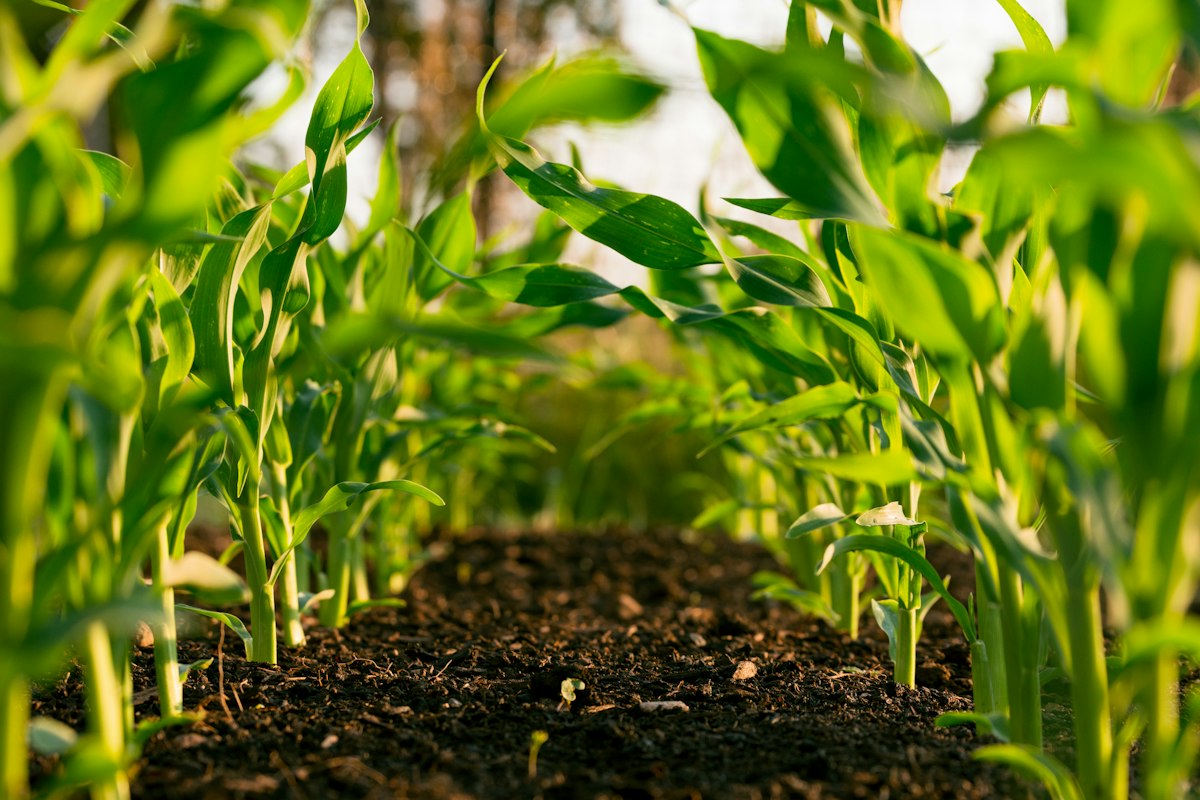
Urea fertilizer was trading around $455 per ton at New Orleans in February 2026. By late April it had climbed to nearly $700 per ton. That is not a seasonal adjustment. A disruption to a critical global shipping corridor earlier this year cut off roughly one-third of global fertilizer shipments at once, and nitrogen prices moved hard. The result: a Farm Bureau survey found that 70 percent of farmers cannot afford all the fertilizer they need for this growing season. Farmers in the South report the sharpest pain, with 78 percent saying they cannot cover their needs. In the Midwest, the number is closer to half. Input costs were already elevated. This is a different problem.
The Phosphate Problem on Top
Nitrogen is not the only input under pressure. Phosphate fertilizer has been subject to countervailing duties on Moroccan and Russian product since 2021, with tariff rates ranging from 16.6 percent to more than 47 percent. Those duties are now in a five-year sunset review, and 64 state and national ag organizations have signed letters asking Mosaic and J.R. Simplot to withdraw their support for keeping those duties in place. The organizations argue the tariffs have added to input costs at a time when farm margins were already under pressure. Mosaic and Simplot have said they intend to maintain their position. The final ITC decision is not expected until spring 2027. That is a long time to wait when you need to put fertilizer down now.
When Input Costs Outrun the Price
The math that breaks first is the one where input costs move faster than the commodity price that's supposed to cover them. Corn was trading near $4.68 a bushel this week. That number has to cover land, seed, equipment, fuel, and now fertilizer at levels the input budget wasn't built for. About 40 percent of the cost of producing a bushel of corn is nitrogen-related. When that input nearly doubles in the span of a planting season, your break-even moves whether you updated your numbers or not.
|
From the Barn
Input costs have worked against farmers my whole career. What's different now is the speed. When 70 percent of farmers can't afford all the fertilizer they need going into a planting season, you are not looking at a squeezed margin. You are looking at production decisions that permanently change what comes out of the ground. That has consequences for everyone downstream.
|
|
|
|
THE $42 BILLION RURAL BROADBAND PROGRAM JUST WENT “OPERATIONAL.” THE CABLE ISN'T IN THE GROUND YET.
Congress authorized $42.45 billion for rural broadband in 2021 as part of the Infrastructure Investment and Jobs Act. On April 30, 2026, five years after that vote, the BEAD program was officially declared operational. What that means: 54 of 56 states and territories have approved spending plans, which unlocks the grant funds. What it does not mean: anyone in rural America has faster internet.
Before construction can start, states have six months to finalize contracts with the internet service providers who will build the networks. After contracts are signed, providers must complete environmental and historic preservation reviews and secure federal, state, and local permits. Once all of that clears, BEAD requires networks to be operational within four years of award. Industry analysts who have tracked federal broadband programs for years have called BEAD the most complicated grant program ever built. That description is not a compliment.
What “Operational” Actually Means
|
The program was authorized in November 2021. It became operational on April 30, 2026. That is four and a half years between the vote and the point where any money can actually flow to a project.
|
|
States have six months to finalize contracts with ISPs. Environmental reviews and permitting happen after that. The four-year deployment clock starts once awards are made, meaning most builds run through 2030.
|
|
Some projects are expected to break ground in the second half of 2026. Most rural communities will not see working service until 2027 or 2028 at the earliest.
|
What Rural America Is Actually Waiting On
Buy America requirements, environmental studies, historical preservation reviews, and permit stacking across federal, state, and local agencies all add time and cost before a foot of cable goes in the ground. Congress is aware of the bottleneck. The week of April 20, lawmakers passed two bills targeting broadband permitting delays on federal lands. The program is moving. It is just moving on a timeline that has nothing to do with when rural households needed it.
|
From the Barn
Every farmer with a bad connection has been hearing about this money for five years. Operational means the contracts are not signed yet. The cable is not in the ground. The four-year clock starts after all of that clears. Plan for it, but do not count on it changing anything before the next planting season.
|
|
|
Partner With Us
Want to reach rural America?
Barn Talk goes out to farmers, ranchers, and working-class folks who actually buy things. If that sounds like your customer, let's talk.
[email protected] →
|
|
|
|

|
Tork's Market Update
What the numbers mean for you
|
This Week's Numbers
Prices as of market close · May 7, 2026 · Courtesy of katsgrain.com
|
Corn (Jul '26)
$4.68 /bu
▼ $0.13 on the week
|
|
Soybeans (Jul '26)
$11.92 /bu
▼ $0.11 on the week
|
|
|
Chicago Wheat (Jul '26)
$6.12 /bu
▼ $0.25 on the week
|
|
Live Cattle (Jun '26)
$250.05 /cwt
▼ $2.95 on the week
|
|
|
Lean Hogs (Jun '26)
$99.37 /cwt
▼ $1.90 on the week
|
|
Crude Oil (Jun '26)
$96.00 /bbl
▲ $5.50 on the week
|
Tork's Picks
|
Bitcoin
$79,340 USD
▲ $2,380 on the week
|
|
Tesla (TSLA)
$409.05 /share
▲ $42.83 on the week
|
This isn't financial advice. I'm just a farmer with an opinion.
|
Tork's Take
Everything in the grain complex is lower and crude oil is moving the other direction. Fertilizer is squeezing from one side and fuel is squeezing from the other. If you have grain in the bin and you're waiting on a rally, the input math for next year's crop is already working against you. Cash those decisions out based on what's in front of you, not what you're hoping comes next.
|
|
|
|

|
Sawyer's Spotlight
The younger generation's take, straight from the barn
|
There's a guy I want to put on your radar. Brian Hula runs a company called A2Z Benefits and spends his career doing one thing: finding money that businesses qualified for and never claimed. The credit he keeps coming back to is the research and development tax credit, in the federal code since 1981, available to farms that develop new processes, test equipment, or try to solve production problems, and still unclaimed by 70 to 80 percent of eligible operations. The IRS doesn't advertise it. Nobody in your regular professional network has a financial incentive to mention it.
Most farmers have never heard of it because your compliance CPA is doing compliance work: filing an accurate return. That is their job and they are good at it. Finding credits you didn't know to claim is a different job, with different training. Brian calls it forensic accounting. Not redoing the return. Just going back through it with a specific question in mind: what did you qualify for that you didn't claim?
|
“Most of the farmers I talk to have had the same CPA for 20 years. That relationship is worth something. It just doesn't mean nobody else should ever look.”
|
The credit goes back four years. If you qualify and you've been operating for a while, you're not just looking at this year's filing. You're looking at a window that covers several seasons, and the credit comes off your tax bill dollar for dollar. Not a deduction against income. A $50,000 credit wipes $50,000 off the bill. That is a meaningfully different number than most farmers have ever dealt with.
If you have never had anyone look at your returns specifically for things your regular CPA might have missed, that is the conversation worth having. Brian's at a2zbenefits.net. No referral here. Just putting it on your radar.
If this one hit close to home, hit reply. I mean it. I read every one.
|
|
|
4 Things That Caught Our Eye This Week
|
01
|
The AI boom needs electricians. There aren't enough.
The data center buildout has pushed the construction industry into a 499,000-worker shortfall. Electricians are the most constrained trade. Electrical work accounts for 45 to 70 percent of data center construction costs, and workers skilled enough for those projects are clearing $200,000 and above. The pipeline of trained electricians does not exist at the scale the buildout requires. Rural kids are the most naturally positioned to fill that gap. Nobody is seriously recruiting them.
|
|
|
02
|
734 rural hospitals at risk of closure.
A 2026 analysis found that one-third of all rural hospitals in the U.S. are at risk of closing. That is 734 facilities. More than 40 percent are already operating at a loss. Medicaid cuts in H.R. 1 are expected to push more toward the edge, and an independent analysis found that the $50 billion Rural Health Transformation Fund included in the bill would only offset about 37 percent of the Medicaid reductions rural hospitals face. When the hospital leaves a rural community, it doesn't come back.
|
|
|
03
|
Corn 38% planted, soybeans 33%, both ahead of average.
USDA's crop progress report put corn planting at 38 percent and soybeans at 33 percent as of May 3. Both are ahead of last year's pace and ahead of the five-year average. Cold air and frost concerns in the Northern Plains caused some delays late in the week, but the spring planting season is moving. Winter wheat condition is the one soft spot: rated 31 percent good to excellent nationally, which is not a number that makes anyone comfortable heading into summer.
|
|
|
04
|
China cutting grain imports. Keeping soybeans.
China is moving to reduce bulk grain imports as domestic production climbs, with projections showing a 25 percent decline in overall grain imports by 2035. Soybeans are the exception. Chinese officials specifically flagged soybeans as a long-standing food security concern and signaled continued strong import demand in the 2026 rural policy blueprint. For U.S. soybean growers, that is the one piece of the China trade picture that has not changed.
|
|
|
Before You Go
|
Barn Talk Trivia
Think You Know Your Stuff?
This Week's Question
Farmers talk about topsoil as the foundation of any operation. Roughly how many years does it take for nature to form just one inch of new topsoil through natural processes?
| A About 5 years |
|
B About 50 years |
|
| C About 500 years ✓ |
|
D About 5,000 years |
|
Answer
C: About 500 years. Natural soil formation requires centuries of weathering, organic matter accumulation, and microbial activity working together. A single inch of topsoil takes roughly 500 years to develop under natural conditions. It can erode in a single season of poor management, which is why soil health decisions carry consequences that outlast any one farm generation.
|
|
|
Did You Know?
It takes roughly 1,800 gallons of water to produce one pound of beef. That includes the water that goes into growing the feed grain, the water the animal drinks over its lifetime, and the water used during processing. For every pound of beef on a plate, there's a water ledger behind it that most people never see.
|
|
Barn Talk Word of the Week
|
WINDROW
|
A long row of cut hay, grain, or other crops left lying in a field to dry before baling or collection. The line matters because airflow and sun angle affect how fast it cures. What you rake before baling tells you a lot about the quality of the final bale.
|
|
|
|
Thanks for reading this week. If something in here was worth passing along, forward it to someone who could use it. We are building this thing one reader at a time, and every share counts toward the live event.
We'll see you in the barn.
Sawyer & Tork
joinbarntalk.com
|
Know Someone Who Needs This?
Forward this to a farmer, a rancher, a tradesman, or anyone who's tired of being ignored by the mainstream media. Help us get to 10,000 subscribers and earn your spot at the live event.
Share Barn Talk
YouTube |
Instagram |
Sawyer's X |
Tork's X |
Spotify
© 2026 Barn Talk · joinbarntalk.com
|
|
