
BARN TALK
The Unfiltered Voice of Rural America
Weekly Newsletter · Issue #001 · April 1, 2026
|
|
Hey folks, Five weeks into the 10% global tariff and grain farmers are still trying to figure out what it actually means for their operation. Beef got an exemption. Some fertilizers got an exemption. But corn and soybean producers are heading into spring planting with China's retaliatory response still hanging in the air, fertilizer prices up 15%, and nobody in Washington giving them a straight answer. Meanwhile, Zach Johnson, the Millennial Farmer himself, sat down in the barn with Tork and Sawyer, and the conversation got into everything from why he almost became a race engine builder to what it actually takes to build something real in agriculture when nobody's handing you anything.
This Week
|
Five weeks in: what the 10% global tariff is actually doing to grain farmers heading into planting
|
|
Fertilizer up 15% going into planting. Nobody locked in early. Now they're paying for it.
|
|
Markets this week: cattle surging, crops soft, Bitcoin taking a beating
|
|
Sawyer's Spotlight: what Zach Johnson figured out by accident that most farmers haven't figured out yet
|
|
Farm Bill 2026 clears committee. Here's what's in it and why you should care
|
|
|
Live Event Countdown
We're at 602 of 10,000 subscribers. Help us get there.
Hit 10,000 and we throw a live event at the barn. Subscribers get first access to tickets.
|
|
|
Five Weeks Into The 10% Tariff, Grain Farmers Are Still Doing The Math
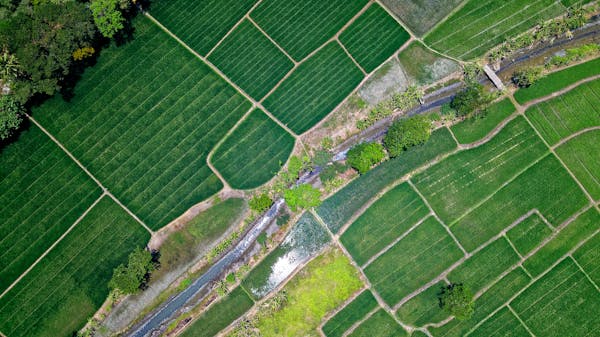
The 10% global tariff went into effect February 24 after the Supreme Court struck down the emergency powers authority behind the original tariff structure. The administration re-imposed it under Section 122 of the Trade Act of 1974 instead. Beef got an exemption. Most fertilizers got an exemption. The optics for ag looked decent on paper. But corn and soybean farmers are now five weeks in and the real math is more complicated than the exemption list suggests.
The China Problem Hasn't Gone Away
Beef producers who got an exemption are in better shape. But grain farmers are still exposed to the biggest risk in the room: a retaliatory response from China during planting season. China has historically used American soybeans as a pressure lever in trade disputes, and that threat hasn't been removed. The administration signed a $2 billion purchase commitment for U.S. soybeans and wheat out of Bangladesh, which is real. But Bangladesh isn't China. The soybean market watches China's buying pace more than any other signal, and that signal is still uncertain heading into the decisions that matter most.
What It's Actually Costing
The tariffs have generated roughly $958 million in revenue for the federal government so far in 2026, according to the Tax Foundation. Crop farmers lost $34.6 billion in 2025 per the American Farm Bureau. Those two numbers tell you everything you need to know about who's absorbing the cost of this trade strategy. Farmers are heading into spring planting with elevated input costs, soft commodity prices, and a trade policy landscape that changes faster than they can adjust their marketing plans.
|
From the Barn
I don't trust any tariff that gets re-announced under a different law two weeks after the first one got thrown out. What I do know is that every time trade policy gets unpredictable, the guy in the middle of the supply chain takes it in the teeth while the people writing the policy go home and eat dinner. Watch your basis. Watch China's buying pace on beans. And if you haven't talked to your lender about what this spring looks like under a few different price scenarios, have that conversation before you put a seed in the ground.
|
|
|
|
Fertilizer Up 15% Going Into Spring Planting. Most Farmers Didn't Lock In Early.
Retail fertilizer prices continued climbing through late March, with UAN28 (liquid nitrogen) up more than 15% compared to a month ago according to DTN data. The driver is a combination of ongoing Middle East conflict disrupting fertilizer supply chains and a rebound in energy prices, with natural gas being the primary feedstock for nitrogen fertilizer production. Farmers who didn't lock in pre-season prices are now buying at the top.
The reason fewer farmers locked in early this year is pretty straightforward: multiple years of compressed margins made it hard to commit capital ahead of planting. After a rough stretch, a lot of operations are running lean and making reactive purchasing decisions rather than strategic ones. Multiple years of compressed margins don't leave a lot of room for strategic capital commitments, and now input costs are hitting at the worst possible moment.
Where Prices Stand
|
UAN28 (liquid nitrogen): Up 15% month-over-month. Middle East conflict is disrupting supply routes.
|
|
Phosphate (DAP/MAP): Elevated, with additional pressure from sulfur costs up sharply in Q1 2026
|
|
Potash: Nutrien ramping Canadian production, which should provide some relief, but not before this application season
|
The Bigger Picture
Fertilizer is one of those input costs that gets treated like a fixed expense until it isn't anymore. Corn and soybean prices are both soft right now due to trade uncertainty. Planting into elevated input costs with compressed grain prices is a tough place to be. The operations that make it through margin cycles like this are the ones that had their cost of production dialed in before they ever touched the throttle in the spring.
|
From the Barn
This is exactly the kind of situation where knowing your cost of production per acre isn't optional. Not an estimate. The real number. If you don't know what a 15% spike in nitrogen actually does to your breakeven, you're flying blind right now and the weather doesn't give you extra time to figure it out. Run the numbers before you buy.
|
|
|
Partner With Us
Want to reach rural America?
Barn Talk goes out to farmers, ranchers, and working-class folks who actually buy things. If that sounds like your customer, let's talk.
[email protected] →
|
|
|
|

|
Tork's Market Update
What the numbers mean for the people actually in the field
|
This Week's Numbers
Prices as of market close · Source: katsgrain.com
|
Corn (May '26)
$4.62 /bu
▼ $0.08 on the week
|
|
Soybeans (May '26)
$11.59 /bu
▼ $0.16 on the week
|
|
|
Chicago Wheat (May '26)
$6.05 /bu
▼ $0.10 on the week
|
|
Live Cattle (Apr '26)
$238.50 /cwt
▲ $5.25 on the week
|
|
|
Lean Hogs (Apr '26)
$90.78 /cwt
▲ $2.10 on the week
|
|
Crude Oil (May '26)
$94.48 /bbl
▼ $3.02 on the week
|
Tork's Picks
|
Bitcoin
$66,587 USD
▼ $4,713 on the week
|
|
Beyond Meat (BYND)
$0.72 /share
▼ $0.48 on the week
|
This ain't financial advice. I'm just a farmer with an opinion.
|
Tork's Take
Cattle is the bright spot this week and it makes sense. The herd is tight, beef demand hasn't fallen off, and tight supply is finally doing what tight supply is supposed to do for producers. Corn and beans are under pressure from the trade noise, which was predictable the second tariff chatter started picking up again. Bitcoin had a rough week and I'll be honest, I don't fully understand why it does what it does, but I know it doesn't like uncertainty any more than the rest of us do. Beyond Meat filed a material weakness in their financials this week and the stock got destroyed. A fake meat company with accounting problems is exactly what you'd expect from a fake meat company. The futures market is what it is. Watch your basis on corn and beans, watch your cattle contract rolls, and keep an eye on crude because input costs move with it.
|
|
|
|

|
Sawyer's Spotlight
The younger generation's take, straight from the barn
|
We had Zach Johnson, the Millennial Farmer, in the barn recently, and one of the things that stuck with me most wasn't the big stuff. It was how the whole thing started. He sat on the idea of doing YouTube for over a year before he ever made a video. When he finally did, he kept quiet about it because he genuinely didn't want the neighbors to think he was the weird YouTube guy. He had no plan. No brand strategy. Just a camera and a willingness to show what the day actually looked like.
Two years in, he hadn't even hooked up his bank account to the platform. He found $200 sitting in a monetized account one day and thought he was rich. That's the origin story of one of the biggest agriculture media presences in the country. It's almost funny until you realize the lesson: the people who build something real usually start before they're ready, with less than they think they need, and figure out the rest along the way.
|
"I kept it quiet for a long time because I didn't want it to get out there and be the weird YouTube guy. When people started catching on that I had a channel, some would say, you know, you can make money on YouTube. And I thought, sure, but you have to have a monster channel for that."
|
What Zach accidentally figured out, and what I think most farmers still haven't fully absorbed, is that people are hungry for something real. Not polished. Not produced. Real. The videos that took off for him weren't the ones where everything went right. They were the ones where everything went sideways. The blizzard coming in, the batteries dead, the shed door frozen off the rails. Content that looks like an actual day. Because it was an actual day.
We talk a lot on this show about how small farms stay viable going forward and the answer always comes back to the same place: you have to close the gap between yourself and the people who eat what you raise. That gap is trust. And the fastest way to build trust with someone who doesn't know anything about farming is to just show them what you do and let them make up their own mind. That's it. That's the whole thing.
If you've been thinking about picking up the camera or starting something on your operation and you haven't pulled the trigger yet, hit reply and tell me what's stopping you. I read every one.
|
|
|
4 Things That Caught Our Eye This Week
|
01
|
Beef Prices Surging as Cattle Herd Hits Lowest Level Since the 1950s
Boxed beef prices are moving higher than normal for this time of year because cattle supply is genuinely tight. The national herd is at its smallest point in over 70 years after years of herd liquidation driven by drought and compressed margins. Producers who held cattle through the lean years are finally seeing the upside. The flip side is that packing capacity and feedlot margins are getting squeezed on the other end.
|
|
|
02
|
Farm Bill 2026 Clears House Ag Committee in 34-17 Bipartisan Vote
The Farm, Food and National Security Act of 2026 passed out of committee this week and is heading to the full House. The bill includes updates to commodity title payment rates and crop insurance provisions that have been overdue since the last Farm Bill expired. It's not law yet and the Senate still has to work its version, but a bipartisan committee vote this late in the process is a meaningful signal. Worth watching as it moves.
|
|
|
03
|
USDA Drops $26.8 Million in Grants for Direct-to-Consumer Ag Markets
The USDA announced funding through the Local Agriculture Market Program this week, targeting farmers and food businesses trying to build or expand direct-to-consumer and local market channels. Whether you're into that or not, there's money on the table for operations working on the direct sales side of things. Check the USDA's LAMP program page if that's a direction you're already heading.
|
|
|
04
|
Tech Giants Are Coming for Midwest Farmland to Build Data Centers
Multiple major technology companies are racing to acquire or lease Midwest agricultural land for AI data center construction. Low land costs, available water, and access to transmission infrastructure are making rural Illinois, Indiana, and Iowa attractive to the tech industry in a way that farmland hasn't seen since the ethanol boom. It's worth paying attention to how this affects land prices and long-term lease markets in your area.
|
|
|
Before You Go
|
Barn Talk Trivia
Think You Know Your Stuff?
This Week's Question
According to the USDA, what is the approximate average size (in acres) of a U.S. farm operation today?
| A 125 acres |
|
B 445 acres ✓ |
|
| C 890 acres |
|
D 1,500 acres |
|
Answer
B. 445 acres. The USDA Census of Agriculture puts the average U.S. farm at approximately 445 acres. That number masks a huge range. Millions of small operations under 100 acres coexist with mega-operations above 10,000, and 445 is the average when you run the math across all of them.
|
|
|
Did You Know?
The U.S. beef cow herd is currently at its lowest level since 1951, under 28 million head. That's a big part of why boxed beef prices are running hot right now. When the herd gets this tight, it takes years to rebuild because you're selling the animals that would otherwise be producing the next generation of cattle. The tightness isn't going away fast, and that's a real opportunity for producers who held on to their cows through the rough years.
|
|
Barn Talk Word of the Week
|
BASIS
|
The difference between your local cash price and the nearby futures price for a given commodity. Basis can be positive or negative, and it moves based on local supply and demand, transportation costs, and regional factors. When people say "basis is wide" or "basis is weak," they mean the cash price is running well below the futures price, often a sign of local oversupply or weak nearby demand. Watching your basis matters more than most people give it credit for, especially in a tariff-volatile week like this one.
|
|
|
|
Big week for news, and it's only going to stay busy from here as planting season gets underway and the trade situation keeps moving. Keep tabs on your inputs, know your numbers, and don't let the noise push you into a decision you haven't thought through. We'll keep watching it and reporting what matters.
We'll see you in the barn.
Sawyer & Tork
joinbarntalk.com
|
Know Someone Who Needs This?
Forward this to a farmer, a rancher, a tradesman, or anyone who's tired of being ignored by the mainstream media. Help us get to 10,000 subscribers and earn your spot at the live event.
Share Barn Talk
YouTube |
Instagram |
Sawyer's X |
Tork's X |
Spotify
© 2026 Barn Talk · joinbarntalk.com
|
|
